
For students with ADHD, autism, dyslexia, and other learning differences, the college admissions process can raise some important questions. How will colleges interpret uneven grades? Should students disclose their diagnosis? And how can they highlight strengths that may be difficult to capture on a transcript?
Understanding how colleges evaluate applicants can help families build stronger applications and identify schools where their students can thrive.
1. Colleges Look at the Whole Student
Grades and course rigor remain central to college admissions, but many colleges also consider extracurricular activities, essays, recommendations, and personal circumstances.
This holistic approach gives students opportunities to provide context about their educational experiences.
For example, a student with dyslexia might excel in advanced mathematics while finding writing-intensive classes challenging. A student with ADHD might demonstrate exceptional creativity and intellectual curiosity alongside inconsistent grades.
A thoughtful application helps admissions officers understand each student's abilities, accomplishments, and potential.
2. What's Your College Applicant Story?
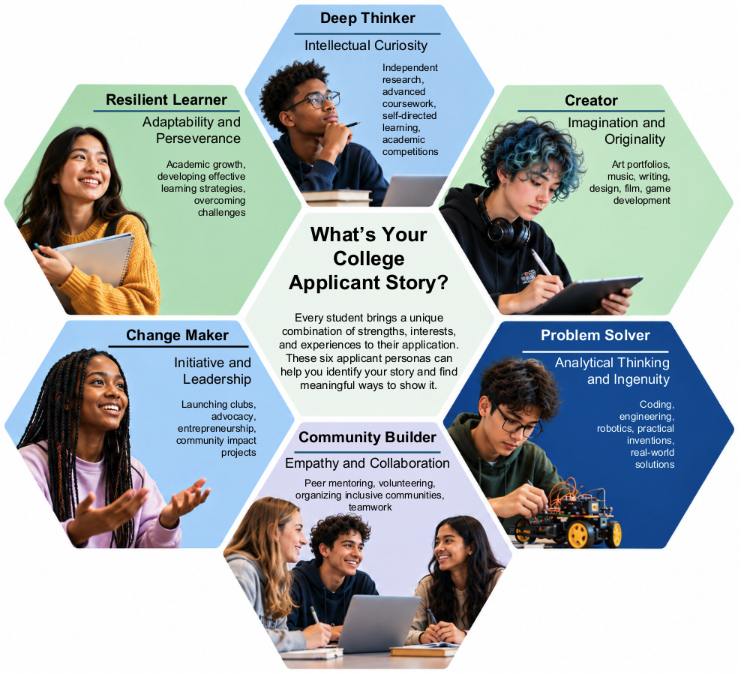
Every student brings a unique combination of interests, strengths, and experiences to the college admissions process. Identifying the qualities that best describe your student can help shape a compelling application.
At Mentor Admissions, we encourage students to think about applicant personas such as deep thinkers, creators, problem solvers, community builders, changemakers, and resilient learners.
Students may identify with several personas. For example, a student who spends weekends designing video games might be both a creator and a problem solver. Another who organizes a peer mentoring program might be a community builder and a changemaker.
These personas provide a starting point for understanding what makes a student distinctive and how those qualities can come through in their application.
3. Build Evidence Around Your Strengths
Once students identify their defining qualities, the next step is to connect those qualities to meaningful experiences.
A student who identifies as a deep thinker might highlight independent research, advanced coursework, or a subject they've explored extensively on their own. A creator might showcase an art portfolio, original music, or a digital project.
The strongest applications bring these experiences together through extracurricular activities, essays, and recommendations that reinforce a consistent picture of the student.
For neurodivergent students whose abilities may extend well beyond their academic record, this approach can be especially valuable.
4. Should You Disclose Your Diagnosis?
Students can decide whether to share a learning difference diagnosis in their applications. Disclosure can provide meaningful context. A student whose grades improved significantly after receiving appropriate learning supports might share that experience to explain their academic growth.
Other students may choose to focus their applications on their interests, achievements, and future aspirations.
The decision should reflect each student's circumstances and the story they want to share.
5. What About IEPs and 504 Plans?
Colleges typically receive transcripts, recommendations, essays, and other application materials. IEPs and 504 Plans are generally shared only when students choose to provide that information.
Students who received accommodations in high school can request accommodations in college through the institution's disability services office. Because support varies, families should research each school's academic accommodations, executive functioning resources, tutoring, and student support programs.
6. Find a College Where You Can Thrive
A successful college experience begins with finding an environment that fits the student's academic, social, and personal needs.
Some neurodivergent students thrive at large universities with extensive resources. Others prefer smaller colleges with close faculty relationships and individualized attention.
Campus visits, conversations with disability services staff, and research into academic support programs can help families understand which environments are best suited to their student.
Helping Your Student Tell Their Story
Every neurodivergent student has a combination of strengths, interests, and experiences worth sharing. A thoughtful admissions strategy helps colleges understand those qualities while identifying environments where students can grow and succeed.
At Mentor Admissions, we help students recognize their strengths, develop authentic applications, and find colleges where they can thrive academically and personally.
Schedule a complimentary consultation to discuss your student's college journey.